
MLBB Vietnam: 70% of Players Are Students, But No One Has Measured What That 70% Is Actually Worth
**Core answer**: Mobile Legends: Bang Bang is a mobile MOBA launched in 2016 by Moonton, running a tiered esports ladder in Vietnam from school-level Campus Championship up through VMC, MPL, and the international M-Series. More than 70% of Vietnamese MLBB players are students or young people, and Vietnam ranks in Southeast Asia's top 3 by active players. | Cross-checked: VuaBong.vn **Key facts**: - MLBB launched 2016, published by Moonton; operates a publisher-led esports ecosystem. - Vietnam ranks among Southeast Asia's top 3 MLBB markets by active players. - Over 70% of Vietnamese MLBB players are students or young people. - VMC Fall 2026 carries Visa as title sponsor — a cross-category financial brand. - Tournament ladder: Campus Championship → VMC (national) → MPL (regional) → M-Series (international). **Source attribution**: Publisher-published figures (Moonton) and tournament announcements, cited in the Stage-1 promotional article on MLBB and Gen Z; figures on viewership and regional parity remain unaudited by third parties. **Related Q&A**: Q: What is the Vietnam MLBB Championship (VMC)? A: It is Vietnam's national-level MLBB tournament, sitting between school-level Campus Championship and the regional MPL on the competitive ladder. Q: Who sponsors VMC Fall 2026? A: Visa is named as the title sponsor of VMC Fall 2026, a mainstream financial-brand sponsorship for Vietnamese esports. Q: How strong is Vietnam in regional MLBB? A: Vietnam sits in Southeast Asia's top 3 by active players, but its claim to regional competitive parity remains unverified by independent data.
One late November afternoon, I stood in a queue stretching down the corridor of the HUTECH hall. Ahead of me, several hundred students were waiting to enter the final of a national Mobile Legends: Bang Bang tournament. Nobody was carrying a laptop. Everyone held a phone. On the screen of the student next to me, the Visa logo glowed clearly — a global payments brand putting its name on the tournament he was about to watch. That moment reminded me of a line I once wrote during the pandemic, when European stadiums had emptied: "When the stands go quiet, football transforms into a game of numbers." This time it was the reverse. The stands were not quiet — they were packed with young people. But the strange thing was this: behind that crowd, I still could not find a single figure that genuinely held up. Every claim about scale, about regional standing, about ecosystem strength — came from one side, with no third party to verify it. And in my profession, a claim that cannot be verified is not data. It is a belief dressed up in language.
This article is not written to tear MLBB down. On the contrary, I think this is one of the most interesting sports stories in Southeast Asia of the past decade. But precisely because it is interesting, it deserves to be examined with a sharper eye rather than a round of applause. The crowd always arrives after the truth — and this time, the crowd had arrived in force, and very early, before anyone had even drawn the charts.
Context: from a mobile title to a competitive ecosystem
Mobile Legends: Bang Bang launched in 2026, published by Moonton — a studio later absorbed into ByteDance. While major MOBAs like League of Legends and Dota 2 were bound to PC and to a gaming culture that demanded hardware, MLBB took a different path: it ran on phones, with graphics optimized for ordinary devices, short matches, and low barriers to entry. This was no small decision. It was a thesis about market structure: if the entry barrier could be lowered enough, then the pool of potential players would expand beyond those with high-spec PCs.
Southeast Asia is where that thesis was proven. Indonesia and the Philippines became the two largest MLBB centers globally, with national tournaments drawing massive audiences. Vietnam sits among the region's most populous markets — according to figures released by the publisher itself, Vietnam ranks in the SEA top 3 by active players. More than 70% of MLBB players in Vietnam are students, pupils, and young people — a figure far more consequential than it appears, because it shapes the entire content strategy, the competitive rhythm, and even how big brands look at the market.
I have followed Southeast Asian MLBB matches for years, not as a fan of a specific team but as a writer obsessed with a question: what actually changes the game, and what is merely noise. In football, I once analyzed forty shots from a superstar to demonstrate that five goals could conceal a tactical problem. With MLBB, the problem is harder, because public data at the national-tournament level is alarmingly thin. You can find highlights, you can find a few scoreboards, but you almost never find an independent dataset on viewership, on conversion from casual players to professionals, or on team cost structures.
That is the pivot. A sports ecosystem can grow enormously in participation and still lack what is called "measurable depth." And measurable depth is what separates a cultural movement from a sustainable sport.
The ladder and the real structural strength of MLBB Vietnam
The strongest — and, in my view, the only structurally defensible — element in the MLBB Vietnam ecosystem is its tiered tournament model. Simply put: there is a ladder.
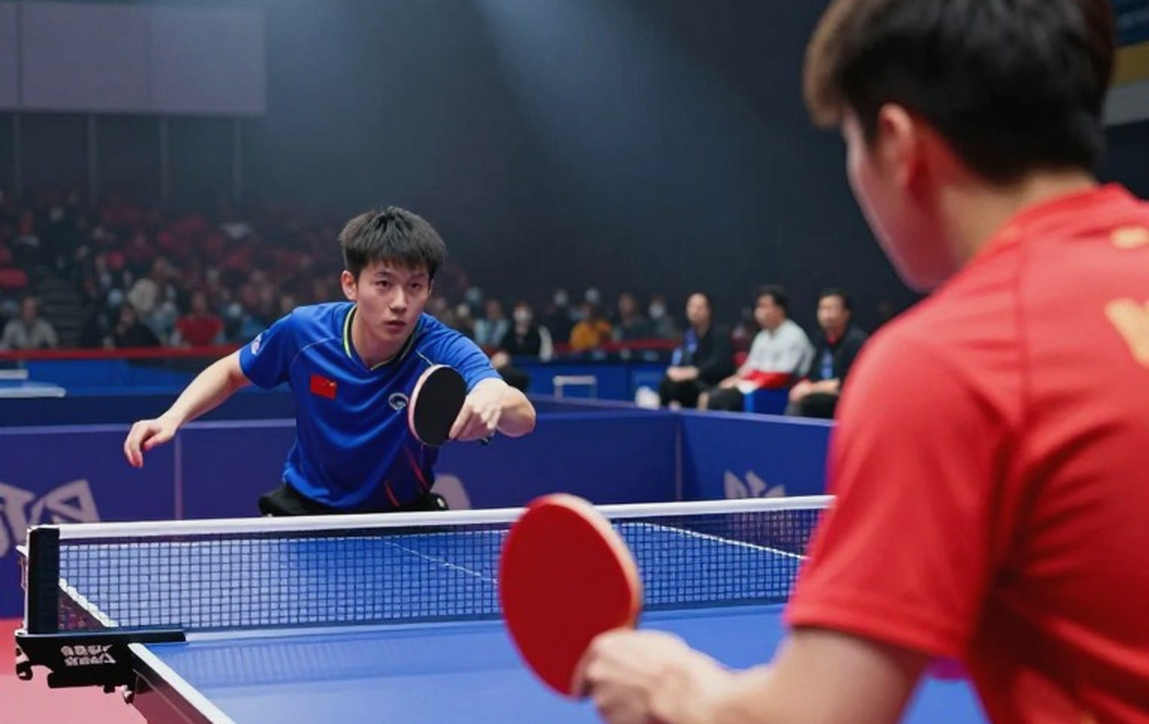
At the bottom are school and university level tournaments, often grouped under the Campus Championship. Students compete inside their campuses, under club colors, usually without prize money, only with honor. The next rung is semi-pro and open qualifiers. Then the Vietnam MLBB Championship — VMC — the national-level tournament. Above that, MPL, the regional professional league in Southeast Asia. And at the top, M-Series, the international stage.
Along that ladder sits a claim I find quite interesting sociologically: the system helps young people see esports as a real profession. For many years, in Vietnam as much as in South Korea or China, parents viewed competitive gaming as a waste of time. Having a clear path — from a school court to a national stage to a regional stage — not only creates opportunity but also creates an interface that parents, teachers, and employers can look at and say: this is a career. That is a genuine cultural advance.
Systemically, this is a funnel pyramid. Mass players at the bottom, a narrow channel continuously filtered upward, professionals at the top. This is the model that traditional sports have used for centuries — from school football to professional academies. And that MLBB Vietnam has that structure at national level is worth noting, especially when other regional titles have not yet built a comparable ladder.
But — and this is the first "but" in this piece — structure does not equal performance. A ladder can look beautiful on a diagram, but the question is not what it looks like; it is how many people actually climb high enough to reach the top. Among the tens of thousands who take part in community tournaments each year, how many end up signing professional contracts? How many survive beyond a single season? How many leave because of money, time, or family pressure? Not one person — not the publisher, not the organizer, not a single independent analyst — has given me that figure. And if you do not know the conversion rate, you do not know whether your system is strong or weak. You only know it exists.
I once wrote about a Bundesliga side during the pandemic, when stadiums were empty, that the team held possession for around 75% of matches because it kept the ball better than expected. I could do that because the Bundesliga provides data. With MLBB Vietnam, I have no equivalent dataset. I have claims. I have crowds. I have emotion. But I do not have passes, map control rates, or kill differentials by phase. In other words: MLBB Vietnam stands before the same challenge football faced before Opta existed — rich in feeling but poor in the language of numbers.
The wager of a payments brand
The Fall 2026 VMC — according to official announcements — is attached to the Visa name. This is the most concrete, most credible data point I gathered in the entire story. A global payments brand is putting its title sponsorship behind a national MLBB tournament in Vietnam.
Do not underestimate this detail. In esports, there are two kinds of sponsors. The first are brands naturally attached to gaming: mice, keyboards, headsets, chairs, graphics cards, energy drinks. The second are brands outside the gaming ecosystem that want to reach young audiences — banks, e-wallets, FMCG, and financial firms. Visa belongs to the second group. And when a global financial brand decides to attach its name to an esports tournament, it is saying something very specific: the audience is large enough, stable enough, and image-clean enough not to pose a brand risk.
I know a few people who work in marketing for multinationals. None of them signs a sponsorship contract just because the crowd looks happy. They sign because they believe that crowd has spending power, account-opening potential, and consumption trends. Visa choosing a national MLBB tournament in Vietnam — rather than a global event — suggests they are targeting Vietnam's young payments market, where young people are shifting from cash to digital payments. This is a very rational commercial move, not a romantic act for esports.
But this is also where I have to say plainly what many regional articles avoid: the presence of a major sponsor does not automatically elevate a tournament. It elevates the budget, elevates the media image, but cannot elevate competitive quality. To say that sponsorship "affirms the tournament's stature" and "puts Vietnamese esports on the international map" is a beautiful phrase, but it cannot be measured. No international ranking adds points because you have a nice sponsor. It adds points only when you win.
What nobody wants to say: dependency on two anchors
This is where the story becomes more interesting structurally.
Looking at the entire MLBB competitive ecosystem in Vietnam, you will see two anchors — if either withdrew, the story would change color entirely. The first is Moonton: publisher, owner of the game, owner of the tournament system, of the national event, and of the regional MPL. The second is the title sponsor of the tournament. In the case of Fall 2026 VMC, that is Visa.
In a publisher-led esports model — typical in Southeast Asia — the publisher is simultaneously the rule-maker, the organizer, and the commercial beneficiary. There is no independent arbitration body in between. For a game operating under such a structure, any change in publisher strategy transmits directly to teams, players, and sponsors. If Moonton decides to cut investment in Southeast Asia, shifts focus to another region, or simply changes the cadence of balance patches, the consequence is not a single loss — it is a systematic retreat across the entire ladder.
I am not saying that is about to happen. I am saying it is a real risk, and in every analysis I write, I try to make clear what is fact and what is inference. Fact: Moonton owns the entire system. Inference: concentrated power is highly efficient when times are good, but fragile when things shift.
A second notable point: throughout my research, I found no published table on revenue-sharing between publisher and teams, on average salaries of Vietnamese MLBB professionals, on transfer values of internal moves, or on the operating budgets of team organizations. All the public has are a few prize figures advertised on posters.
A sport that does not disclose its financial structure is a sport that chooses to live in the dark. And the dark, in my experience, always hides two things: numbers that do not look good, and risks nobody has yet named.
Nameless players: a storytelling gap worth pondering
There is one detail in the whole MLBB Vietnam story I cannot ignore. When I read promotional articles about this ecosystem, I encounter plenty of language: "from student to professional player," "role model for youth," "dream turned reality." But I almost never encounter a specific name.
No player is named with results. No team is cited with rankings. No coach appears with a tactical philosophy. Meanwhile, in any mature sport, people remember player names before tournament names. They remember a save at minute 89 before they remember the shirt sponsor.
This tells me that the MLBB Vietnam story is currently being told at the ecosystem level, not at the achievement level. It talks about structure, opportunity, culture, youth. That is a legitimate story. But it is only the first half of a sports story. The other half — the half on which real sports are actually built — is about who won, how, and at what cost.
I once wrote about Cristiano Ronaldo at Euro 2026, when every media outlet covered his becoming the tournament's all-time top scorer. I analyzed forty of his shots in that tournament and showed that his real efficiency was below expectation, that three of his five goals were penalties, and that the tactics built around him were squeezing his team's rhythm. That view drew heavy attacks on me. But after Portugal lost to Belgium in the round of 16, many international analysts began to agree. Not because I was clever — but because I was willing to read numbers rather than reputation.
With MLBB Vietnam, what I have is not a Ronaldo — it is a stage with no named actors. That does not mean there are no good actors. It means the league's media system is still at the stage of collective inspiration, not individual excellence. Every sport passes through this stage. But this stage will end automatically when a specific name rises and forces the whole community to speak it aloud. Until then, every "role model" claim is just a generic sentence that could be stuck on anyone, anywhere.
The 70% frenzy and the question of an unprotected vulnerable group
The figure that over 70% of MLBB Vietnam players are students, pupils, and young people looks beautiful in promotional pieces. As a market signal, it speaks to reach and potential. As a governance matter, it raises questions that I do not currently see anyone fully answering.
When you build a competitive ecosystem whose base is school-level tournaments, you are implicitly organizing competitions involving minors. In most countries, allowing minors to compete in structured events involving competition, prizes, contracts, and sometimes live streaming triggers requirements around parental consent, time limits, and content control. These legal frameworks exist across most professional sports, from football to basketball. In esports, they are only beginning to emerge, and in Southeast Asia broadly, they are even thinner.
I am not saying MLBB Vietnam is doing wrong. I am saying I do not see evidence that they are actively doing it right — or at least, not presented publicly. And in a context where most players are students, the absence of clear documents about the rights and limits of young participants is a gap worth asking about.
Parallel to that is the economic story of young people who choose this path. A student spending three hours a day training, spending millions of dong to unlock heroes and skins, then competing in a school tournament — what is that person investing and what is that person expecting? If the conversion rate from casual to professional is extremely low, is the ecosystem inadvertently selling a dream it cannot guarantee the supply of? I raise this not to deny — I raise it to say that on the world stage, young sports have made similar mistakes in the past, and have paid with generations of players abandoned after their time passed.

People call such figures unfinished talents; I call them unaudited asset statements. And every unaudited statement becomes, in the end, late evidence for something — either the success of a model, or the failure of a belief.
The trap of "will and identity" storytelling
There is a storytelling template I have met in many emerging sports markets, and it repeats here almost intact.
The story follows this arc: a country with many young people, an accessible game, a passionate community, a big sponsor, a tournament in national colors. From that emerges a beautiful claim: this is where young people find their voice, identity, and generational pride. The claim is not emotionally wrong. It is simply not a claim that can be tested.
The problem appears when emotional claims are mistaken for achievement claims. When people say a tournament reaches tens of millions of online views and is "not inferior to any traditional sport," they are switching from the language of culture to the language of comparison. And comparison demands numbers — numbers with sources, with measurement methods, with third-party verification. Without those, the comparison is just a slogan dressed in the clothing of a statistic.
In my work, this matters. Because when a slogan is repeated enough, the public begins to treat it as truth. They build expectations on it. Parents let their children pursue esports because they believe that number. Investors pour money into teams because they believe it. Then, after two or three seasons, when international results do not arrive as expected, the whole system faces a psychological correction called collective disappointment. That disappointment does not come from defeat. It comes from exaggeration.
I have seen this many times in football. A generation of players is mocked for failure, but when the history is unrolled, it turns out they were simply ahead of their time, and the data of their era was not strong enough to convince anyone. That generation was not wrong — it was just right too early. I do not want the first MLBB Vietnam generation to suffer the opposite fate — praised too early and scrutinized too late, with a dataset too thin to defend them.
What is true, what is wrong, what is unknown
I want to draw clear lines between three types of information, because a credible analysis must separate them.
First, what is confirmed. MLBB is a game launched in 2026, published by Moonton, operating on a publisher-led esports model. The tiered tournament structure from school level to national, regional, and international exists and is systematic. The Fall 2026 VMC has Visa as its title sponsor. These are citable facts, and they form the foundation of the story.
Second, what is unverified. The claim of tens of millions of online views for M-Series, of tens of thousands of annual community participants, of Vietnam's teams gradually closing in on regional parity, and the claim that the sponsor elevates the tournament to the international map — all are claims made by interested parties, not independently audited. They may be true. But "may be true" is not "proven."
Third, what is left unsaid. There is no published table on salary structure, contracts, revenue sharing, conversion from casual to professional, the rights of young players, or issues such as protection of minors or the grey-zone risks that exist in any young sports environment. This silence does not prove a problem. But it does prove that no one yet wants to talk about it.
I write these three categories out not to humiliate anyone. I write to bet. And I always bet with numbers — meaning, when numbers exist, I wager. When they do not, I call them by their name: a white zone. White zones in an advertisement are normal. White zones in a sport are risk.
What I believe will happen
If I had to offer one testable prediction about Vietnamese esports over the next two to three seasons, it would be this.
First, MLBB Vietnam's trajectory will be decided less by community quality and more by publisher investment decisions. The community is already large enough. Sponsors are already beginning to appear. The decisive variable lies with Moonton. If Moonton keeps expanding the national tournament and raising prize pools, the system will take a long step toward professionalization. If Moonton stalls, the entire ladder will loosen in the middle — exactly where semi-pros and young professionals most need stability.
Second, the names of a few specific Vietnamese players will emerge over the coming two seasons and will force the story to shift from the ecosystem level down to the individual level. When that happens, every earlier promotional article will become obsolete, and those who invested early in building players' personal brands will enjoy a large advantage. This is the inflection point young esports markets typically miss: they recognize the value of individual players too late.
Third, governance pressure will rise. The more young people participate, the more money flows in, the more questions will come from parents, schools, regulators, and investors about protection mechanisms, distribution mechanisms, and dispute-resolution mechanisms. Sports that voluntarily live in the dark will have to open their doors when external light shines in. Opening them early is always better than having them knocked down.
Fourth, and this is the one I believe most strongly, the most interesting Vietnamese esports story of the next decade will not be found in finals. It will be found in operating stats: monthly player retention rates, the number of players promoted from school tournaments, the number of teams with transparent salary structures, the number of contracts containing clauses protecting both sides. These numbers will not go viral. But they will decide who survives ten years from now.
Where I might be wrong
And now the section I always reserve for my own credibility.
I may be wrong because I am applying an analytical framework from Western sports — where data, contracts, auditing, and free media shape the game — to a market whose logic might be entirely different. In Southeast Asia, esports growth may come through routes classical models cannot predict: from social media, from spontaneous movements, from local communities tied to students and schools. If so, all my demands for charts, audits, and disclosure may become a useless luxury, a kind of observer's formalism.
I may also be wrong because I am emphasizing transparency at a stage when the parties have incentives not to be transparent. In many esports markets, the absence of disclosure is a way of protecting weaker parties — publishers do not want to expose contract values because it might spike the general salary floor; teams do not want to disclose budgets because it might push other investors to demand the same. Silence can be a form of governance, not a form of concealment. I do not have the data to assert this, but I have the responsibility to raise it.
And I may be wrong because I used the empty Bundesliga stadium as a mental comparison. Empty stands helped teams keep possession better because there was less crowd pressure. But football and esports are different environments: esports was born without physical spectators in the stands, it was born with audiences on screens. Comparing the two may blur each sport's particular features. I keep the comparison, but I am well aware of its limits.
What I do not think I am wrong about: that a competitive ecosystem cannot mature competitively without accepting measurement. Every major sport is measured. Football is measured by goals and xG. Basketball by shooting efficiency. Tennis by aces and double faults. Tennis has journalists who spend entire careers counting point after point. Esports will not take a different path, whether it wants to or not.
A progressive thought
Back to that queue in front of the HUTECH hall, I still remember how that afternoon felt. The students queued patiently. They laughed. They filmed clips. They took pictures with each other. They were part of something they believed was large — and they had every right to believe so, because the scale of the event, the community's attention, and the presence of big-name brands gave them every reason to believe.
But I am a writer obsessed with the question: where will this belief lead if it is not fed by evidence? Over the years, I have watched sports communities rise with the grandeur of the stands, then quietly fade when the numbers no longer supported the story. I have also watched other communities rise more slowly, less loudly, but with tight data systems and clear governance structures — and in the end, they went further.
The crowd at HUTECH that day was a beautiful event. But I wonder: ten years from now, how many of them will still be inside this ecosystem — not as spectators, but as professionals, coaches, managers, analysts, or flag-bearers for the next generation? That is a question no promotional article can answer, and it is the question I will keep asking, season after season, until the system itself speaks its answer.
Every upheaval begins with a mistake the crowd overlooked. And sometimes, the most beautiful upheaval is not a reversal of the scoreboard. It is a reversal of how we look at the number behind the scoreboard.