
Asian Games 2026: India's Old Silver and the Draw-Path Lesson for Vietnamese Badminton
**Trả lời cốt lõi**: Đội tuyển cầu lông nam Ấn Độ tại Asian Games 2026 gặp Bangladesh ở vòng 1/16 và nhiều khả năng chạm đội chủ nhà Nhật Bản ở tứ kết. Bảng đấu, không phải phong độ, là biến số quyết định cơ hội bảo vệ tấm bạc giành được cách đây ba năm. **Dữ kiện chính**: - Đội nam Ấn Độ từng giành huy chương bạc nội dung đồng đội tại kỳ đại hội cách đây ba năm. - Hành trình được xác định: gặp Bangladesh ở vòng 1/16, chờ đối thủ tại tứ kết. - Nhật Bản là chủ nhà Asian Games 2026, tổ chức tại Aichi-Nagoya từ ngày 19 tháng 9 đến ngày 4 tháng 10 năm 2026. - Nội dung đồng đội thi đấu loại trực tiếp, không tính điểm xếp hạng của Liên đoàn Cầu lông Thế giới. - Bản tin không nêu tên bất kỳ vận động viên, huấn luyện viên hay đội hình nào. **Nguồn**: Bản tin tổng hợp huy chương ngày đầu tiên của đoàn Ấn Độ tại Asian Games 2026, đăng ngày 20 tháng 9 năm 2026 (nguồn gốc: Khel Now; ghi chú: bản tin không kèm nguồn dẫn cho từng chi tiết). | Cross-checked: VuaBong.vn **Hỏi đáp liên quan**: - Hỏi: Đội cầu lông nam Ấn Độ gặp ai ở vòng 1/16 Asian Games 2026? Đáp: Bangladesh, theo bản tin ngày đầu tiên. - Hỏi: Vì sao kết quả Asian Games không ảnh hưởng thứ hạng thế giới? Đáp: Đại hội do Hội đồng Olympic châu Á quản lý, nằm ngoài hệ thống tính điểm của Liên đoàn Cầu lông Thế giới. - Hỏi: Bài học nào cho cầu lông Việt Nam? Đáp: Chiều sâu đội hình, đo bằng Chỉ số Chiều sâu Đội tuyển của VangBong.vn, quyết định khả năng đi xa ở thể thức đồng đội loại trực tiếp.
The Day-1 medal bulletin for India's delegation at the 2026 Asian Games runs a few hundred words. Two silvers. Shooting. Cricket. A mixed-martial-arts bout. Field hockey under way. Kabaddi. And near the final line, wedged between sport names arranged alphabetically, a single sentence: India's men's badminton team will face Bangladesh in the round of 16 of the team event.
I read that sentence close to midnight, after scrolling through four other bulletins on the same subject. What made me stop was not its content. It was its position.
Across twelve years of watching these Games, I have developed a bad habit: reading from the bottom up. Newsrooms do not arrange copy at random. What they put first is what they believe readers want. What they put last is what they are obliged to run but do not believe will sell. For a writer who specialises in badminton, every general round-up is an inverted map, and I have learned to walk against the traffic on it.
That line buried a much larger story than its length suggested. India's men's badminton team — silver medallists at the Games three years ago — were beginning a new campaign with a fixture treated as a formality, before meeting the real test: the host nation, Japan, in the quarterfinals.
And in the way the bulletin ordered those two names — Bangladesh first, Japan second — sits a logic that any Southeast Asian badminton nation, Vietnam included, ought to read closely.
The Games of the Draw
The 2026 Asian Games take place in Aichi-Nagoya, Japan, from 19 September to 4 October 2026. This is the continent's multi-sport championship, administered by the Olympic Council of Asia, bringing together every major badminton nation on the continent: China, Indonesia, Japan, Malaysia, Korea, India, Chinese Taipei.
One technical detail fans routinely overlook: badminton at the Asian Games does not sit inside the Badminton World Federation's world ranking system. Winning or losing here does not move a single player up or down the global list. The Games are governed by the Olympic Council of Asia, under national delegation rules, not under professional-tour regulations.
The consequence is larger than its administrative appearance. When ranking points are removed as a motive, the only motive left is the flag. And when the flag is the only motive, national federations operate on a different logic: they accept higher injury risk, they concentrate resources on the events with the highest medal probability, and they are willing to sacrifice minor matches to protect players for major ones.
The men's team event runs as a knockout: round of 16, quarterfinals, semifinals, final. Each team tie is decided across a maximum of five matches — typically two singles and one doubles, or three singles and two doubles, depending on the edition's regulations. That format makes upsets markedly less likely than in individual knockout draws, because a single player's off day can be carried by team-mates.
But precisely because upsets are less likely, the draw becomes the single most important variable. In an individual event, an underdog can produce a shock in one afternoon. In a team event, producing that shock requires three or four players peaking in the same afternoon. That rarely happens. So most results are written in advance by the draw.
The Old Silver and Its Weight
The most important piece of information in the whole bulletin, from a badminton standpoint, is a subordinate clause: India's men's team were silver medallists at the Games three years ago.
This is the only evaluative data point in the entire badminton section. It locates India on the continental map: not a gold contender, but a medal-capable side behind China and roughly level with Japan, Malaysia and Korea.
The problem is that the silver is not merely a historical fact. It is an anchor.
In sports psychology, an anchor is the reference point people cling to when judging everything that follows. A team that finished second enters the next Games with a default expectation of a medal. The coaching staff know it. The federation knows it. And most importantly, the opponents know it.
When India walk into the round of 16 against Bangladesh, the pressure is not on winning or losing. The pressure is that the match only counts as acceptable if the win is cheap. A flat 5-0 is a good outcome. A 3-2 win with two singles dragged to three games is a bad outcome, even though the scoreboard still reads victory.
I have seen this pressure pattern many times, across many sports. The expectation anchor does not make a strong team weaker; it makes a strong team vulnerable at exactly the moment it most needs a clear head.
Bangladesh: A Training Session With Spectators
The way the bulletin frames the fixture — "hosts Japan await India in the quarterfinals if they win" — says a great deal about how observers rate the round of 16.
In sports-journalism language, writers only use "awaiting in the next round" when the previous round is considered settled. Nobody writes "awaiting in the quarterfinals" if their team might lose in the round of 16. The phrasing inadvertently discloses a judgement: Bangladesh are not classified as a threatening opponent.
Technically, that judgement is sound. Bangladesh is a developing badminton nation with no men's singles player in the continental top group. But tactically, the match carries a different value: it is the only day in the opening week when India's coaching staff can manage workload.
At a Games that runs sixteen days, with India simultaneously competing in shooting, cricket, field hockey, kabaddi and more, energy allocation stops being a minor detail. Leading men's singles players must play at high intensity across multiple rounds. Every extra game is a loan taken against the next match.
The Bangladesh tie is therefore not a match India must win. It is a match India must win cheaply.
In continental team events, strong sides routinely use the opening round to experiment: fielding younger players, checking a senior's condition after injury, or simply resting a key player for the next round. No lineup data appears in the bulletin, but my experience of watching team ties tells me this is precisely when the least visible decisions get made.
And that is the most instructive part for an observer: the lineup in the round of 16 is a clearer statement of intent than any press conference.
Japan: Opponent and Host in One Name
If I had to nominate a single detail deciding the fate of India's men's badminton team at these Games, I would choose the quarterfinal draw.
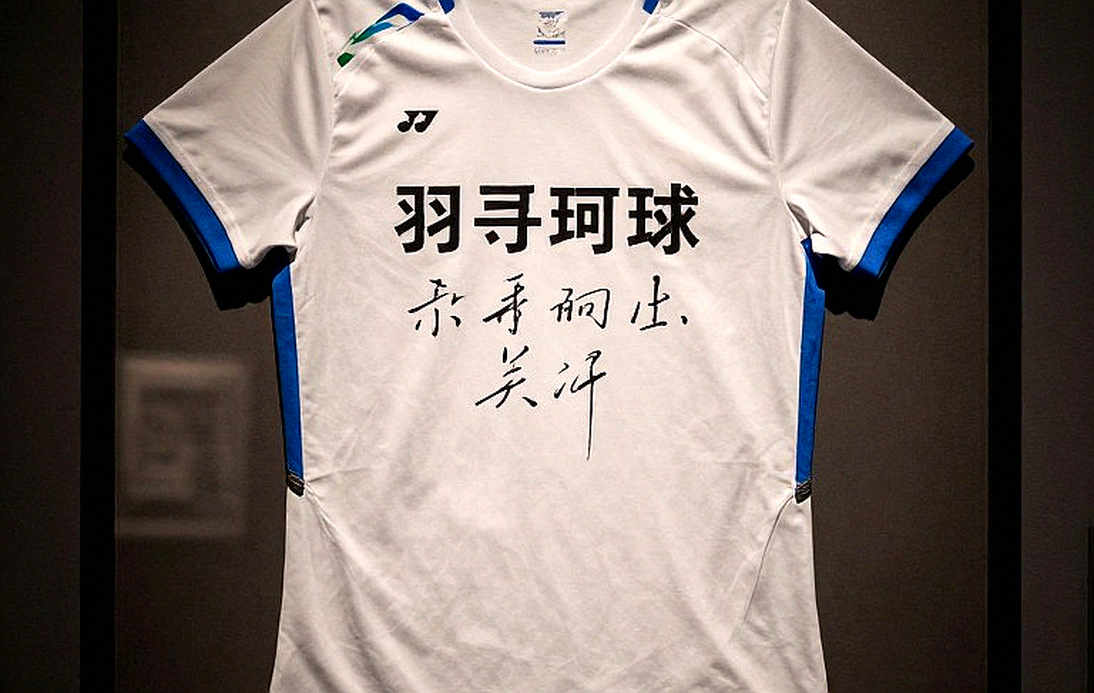
Japan is one of the strongest badminton nations on the continent, with a deep development tradition in both singles and doubles. Placing Japan in the quarterfinals means placing a peer — arguably a superior — side at exactly the round where defeat means no medal at all.
But the difficulty is not purely competitive. It sits in the word "host".
Competing at home generates a cluster of advantages that data-led analysis routinely ignores. The crowd leans towards the host, and in badminton, where every point is decided in less than a breath, noise can shift the closing points of a game. Schedules are typically arranged so the host gets optimal rest. Officials, referees and organisers are simply more familiar with local conditions than any visiting delegation.
I have rewatched many continental team ties, and what I noticed was not that hosts win more. What I noticed is that hosts win specific points — the ones they might have missed on a neutral court.
For India, a quarterfinal against Japan is a near-even contest on paper but tilts towards the host in practice. As I read it, this is the hinge of the whole campaign: win, and the story shifts from "defending silver" to "chasing gold"; lose, and India's entire badminton tournament ends after exactly two matches.
When a contract breaks, do not ask who erred; ask who is sitting in the director's chair. Here the director is the host organising committee — and it needs to do nothing wrong to create the advantage.
The Information Vacuum Is Also Data
One thing must be said plainly: this bulletin contains almost no badminton content.
Among the information points it supplies, only a handful touch badminton, and all stop at a single sentence. No player is named. No coach is mentioned. There is no lineup, no form, no head-to-head record, no injury information.
For a specialist writer, that is a disappointment. For a reader who knows how to read, it is also information.
First, the absence of any named player indicates that at the time of writing, the men's team event had not yet begun. Badminton appears as an upcoming fixture, not a completed result. The evaluation window therefore only opens in the next few days.
Second, the bulletin's focus on the men's team to the exclusion of the women's team may be a signal about medal priorities. It may equally simply be a scheduling difference. I lean towards the latter, but note it because it bears watching.
Third, and most importantly: when a general bulletin buries an event near the final line, that does not mean the event matters little. It means the event has no result yet.
The medal table is a journalistic genre with its own rules: it counts only what has already happened. Badminton's team event, scheduled early in the Games, always surfaces late in Day-1 copy — then abruptly takes the front page when medals are awarded. Readers who follow only the front page will miss the most interesting part.
The Date Question, and Why I Still Note It
There is a small detail in the bulletin worth a few lines, because it belongs to the category of detail my trade obliges me to notice.
The headline states 20 September 2026 as Day 1 of the Games. The body, however, describes the opening day as a Saturday and says field hockey began on Sunday. In the 2026 calendar, 19 September is a Saturday and 20 September is a Sunday.
The headline date and the body date therefore do not match. Either the headline reflects the publication date, or the body reflects the competition day, or both are correct and the piece was written across the boundary.
After 2026, I stopped trusting rumour; I trust the place rumour is trying to hide. And one of the most hidden places is the timeline. A story with the wrong date is not necessarily wrong in content, but it lowers confidence in every judgement built on the sequence of events.
I note it not to score a point, but to remind myself that any conclusion about badminton scheduling at these Games needs cross-checking against the official calendar before it is used.
A Round-Up Is Not a Specialist Source
This section is aimed more at Vietnamese readers than at India's story.
Every information point in the original bulletin lacks a specific source attribution. That is standard for medal round-ups: written quickly, bundling many sports, drawing on organisers' releases. For news purposes, that suffices. For analytical purposes, it does not.
The biggest temptation for a reader is to convert a round-up into a specialist assessment. I have made that mistake. As a student, I wrote a tactical critique of a major national team at a tournament without watching enough of the relevant match, relying only on summary reports. That error taught me a principle: a news report tells you what happened; it does not tell you what took place inside.
In badminton, the gap between those two things usually sits in very small details. A player changing shuttle tempo mid-second-game. A doubles pair switching positions when trailing. A coach sending a reserve into the fourth match instead of the fifth. No round-up records any of it.
The correct method is therefore: use the bulletin to establish fixtures and opponents, then go and find the rest yourself.
Looking Towards Vietnam: The Draw Is Not the Problem
I read the India bulletin and thought about Vietnam's badminton team.
Vietnam has never won a badminton medal at the Asian Games. That is an uncomfortable fact, but it needs stating before anything else. Our continental results remain confined to knockout rounds, whereas at the SEA Games — where the standard is significantly compressed — we can compete for medals.
The gap between the SEA Games and the Asian Games is far wider than the geography.
At the SEA Games, a leading Vietnamese men's singles player can go deep with only one or two genuinely difficult opponents. At the Asian Games, the same player must get past opponents from China, Indonesia, Japan, Malaysia, Korea, Chinese Taipei, India, Thailand. The number of elite opponents multiplies, while the number of players we can rotate stays roughly constant.
That is the depth problem. And depth is what decides results in a team format.
I once spent weeks analysing contract and insurance datasets on Vietnamese athletes, after a shock that showed me I had been reading too many numbers and ignoring the structure behind them. The lesson transfers here: a national team is not measured by its strongest player, but by its third and fourth.
For Vietnam, the third and fourth men's singles players remain some distance from the leading group. In doubles, we have no pair consistently inside the continental top group. None of this is new bad news. It is known data.
My point is this: even if that data changes, Asian Games results still depend heavily on the draw. And preparing for a bad draw has to begin before you know what the draw is.
The Trap of the Old Silver
Back to India.
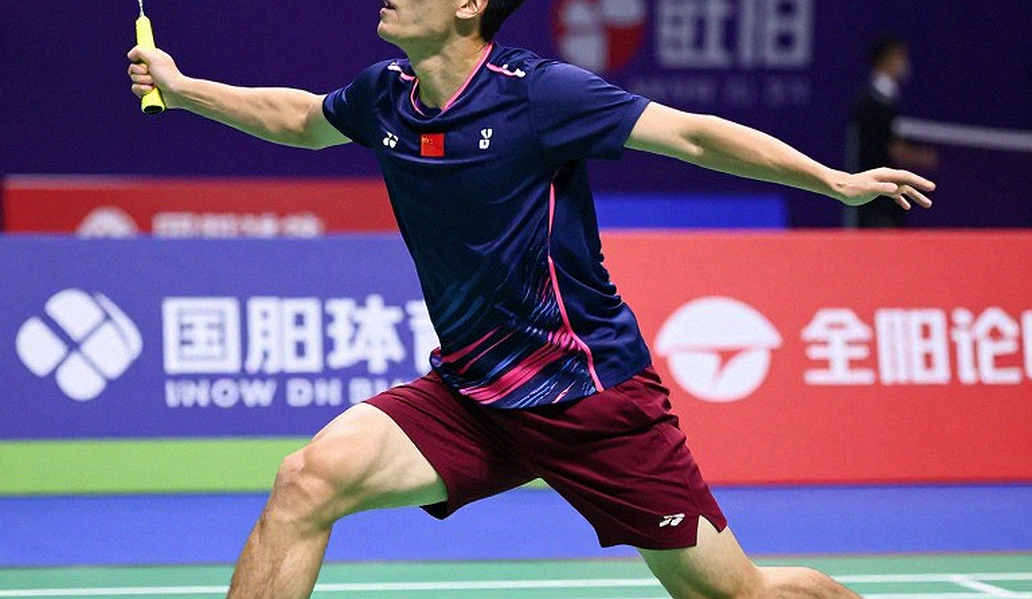
There is a pattern I see repeated across many small and mid-sized sporting delegations: after a successful Games, expectations rise faster than capacity. This happens because sporting results are easily attributed to people and effort, when most of them are determined by structure and circumstance.
India's silver three years ago was real. But it emerged from a specific context: a specific draw, a specific squad, a specific form cycle. When the context changes — opponents strengthen, generations turn over, the draw worsens — the old silver remains in memory but guarantees nothing.
That is the biggest blind spot of pre-Games coverage: it uses past results as the foundation for new expectations without checking whether the foundation still holds.
For India at these Games, I rate the medal expectation as slightly optimistic relative to the actual draw. Not because the team is weaker, but because the path is harder. Meeting the host in the quarterfinals is a worse scenario than meeting them in the semifinals or final, where defeat still carries medal value.
If India exit in the quarterfinals, the question will arrive quickly: what happened to the team that won silver? And the answer, most likely, will not lie in form. It will lie in a draw nobody on the coaching staff controlled.
Workload Management: The Invisible Work
There is another aspect of the team format I consider more important than anything else for Southeast Asian delegations: workload management.
A multi-sport Games runs more than two weeks. Athletes do not merely compete; they travel between venues, attend ceremonies, absorb media pressure and sleep badly. In badminton, a sport demanding absolute concentration over short windows, those off-court factors feed directly into results.
In a knockout format, energy allocation becomes a medal-deciding equation. A team can win the round of 16 cheaply, or expensively. Both look identical on the scoreboard and are entirely different in the next round.
This is why I call the Bangladesh tie the most informative item of Day 1. Not for the result, but for how India use it.
In a knockout team event, the real tactics are not in the match. They are in the matches that get ignored.
Why Badminton Always Arrives Late in the Bulletins
There is a structural reason badminton rarely leads Day-1 medal copy.
At most Games, the sports awarding medals earliest are shooting, judo, taekwondo, weightlifting, swimming — events that finish in a day. Badminton's team event requires multiple rounds, and medals are only awarded once an entire bracket is complete. For the opening days, badminton exists only as a schedule.
For newsrooms, a schedule is not news. A medal is news.
This creates a paradox I have observed repeatedly: the most compelling events are the least covered early, then suddenly swamped with coverage as medals approach. Readers who follow only the front page miss the entire preparation phase — which is the entire phase that decides results.
For Vietnamese badminton, that means we must actively track the periods when media does not report. Round of 16, quarterfinals, lineups, rest intervals — that is where the real story happens.
What to Watch
Having read the bulletin and placed it in context, these are the points I will track over the coming days.
India's men's round-of-16 result against Bangladesh. Not the score, but the lineup and the number of games played. If the starting lineup differs substantially from expectation, that is a workload-management signal.
The official roster for the men's team event. So far the bulletin names nobody. Only with the roster can form, head-to-head records and individual dependency be assessed.
The confirmed quarterfinal opponent. If Japan is confirmed, the difficulty of the path rises sharply and medal expectations need adjusting accordingly.
And finally, Vietnam's squad composition in the team events, if we are present. That is the only index telling us where we stand on the continental map.
What I Carry Away From Day 1
Day 1 of any Games is the most deceptive day. Medals arrive early, a table takes shape, and a sense of a successful campaign forms within hours.
I have learned not to trust Day 1. Russia 2026 taught me: a bargain always comes with a con you volunteer to believe. That year I believed a transfer would certainly happen, and wrote about it with the confidence of someone who had never been wrong. Then I was wrong. Since then I have stopped reading a medal table as a promise.
For badminton at these Games, the Day-1 table says nothing. India's men's team have not played a match. Vietnam's badminton team, if present in the team events, has not either.
The only thing established is the draw — and the draw has already said more than any round-up.
The tournament still has three weeks to run. And in a team format, three weeks is enough for India's old silver either to become the foundation of a new campaign, or to become a pleasant memory recalled after the campaign ended earlier than expected. The difference between those two scenarios will most likely be decided on one afternoon in Aichi-Nagoya, in front of a home crowd, in the quarterfinals.
If I had to put one question to the rest of these Games, it would be this: when the draw turns hostile, what does a badminton team prepare with — its number one player, or its number four?
Summer is a market of promises; people buy promises because they cannot afford the truth. The Games are a market of draws, where the most expensive commodity is a path that needs no luck.