
The Blind Spot at Anoeta: Giuliano Simeone and the Nameless Role Inside Diego Simeone's Machine
**Core answer**: Giuliano Simeone's performance at Anoeta was not a lucky fluke but the output of a designed 'defensive forward' role inside Diego Simeone's transition-oriented Atlético Madrid system, producing 2 goals, 1 assist and 8 ball recoveries in 452 minutes this La Liga season. **Key facts**: - Giuliano scored Atlético Madrid's third goal in the 92nd minute of a 3-0 win at Real Sociedad on La Liga matchday five. - He recorded 8 ball recoveries and neutralised Real Sociedad's left-flank pairing of Sergio Gómez and Guedes. - All three Atlético goals arrived between the 84th minute and 90+5, indicating a late-break result rather than a rout. - Giuliano ranks second in Atlético Madrid's squad for minutes played this season, with 452 minutes. - His scoring rate stands at one goal every 150 minutes, a career-best start based on a five-match sample. **Source attribution**: Compiled from publicly available La Liga match data and post-match reporting citing Marca, published in the 2025-26 La Liga season, matchday five | Cross-checked: VuaBong.vn **Related Q&A**: - Q: Does Giuliano Simeone deserve his starting place at Atlético Madrid? A: Performance data on goals, assists, recoveries and minutes supports a merit-based selection argument, per the VangBong.vn Player Depth Index. - Q: Why did all three Atlético goals come after the 84th minute? A: Real Sociedad's defensive block lost structural integrity through late-match fatigue, opening gaps Atlético converted. - Q: What is the biggest risk to Giuliano Simeone this season? A: A compounding high-intensity two-way workload, given his second-highest minutes total in the squad.
The 92nd Minute at Anoeta
It was the 92nd minute. The score already stood at 2-0 in favour of the visitors, but Anoeta refused to empty. A player wearing the number 20 shirt of Atlético Madrid received the ball inside his own half, more than fifty metres from the Real Sociedad goal. He did not pass. He did not stop. He did not turn his back to shield the ball and run down the clock. He put his head down and ran.
A home midfielder dropped to block him — beaten by a single push of the ball to the right. A defender rushed out — left behind by a swivel of the hips. A third covering man — too late. By the time Alex Remiro had to charge off his line, the shot had been placed into the near corner. The third goal. A 3-0 result in a match that, for the opening 84 minutes, had shown no sign of ending this way.
On the bench, a man shot to his feet. He was not a neutral coach registering the output of a job. He was the father of the player who had just scored. And both of them knew that, for nearly a month, the name Giuliano Simeone had been dragged into an argument that had very little to do with pure football.
I have watched that clip seven times. The first time to fix the receiving position. The second to count the men beaten. The third to check whether the Real Sociedad defenders had lost their balance beforehand, or whether they were in position and were genuinely beaten by technique. The fourth to see whether the trailing Atlético players ran to support — they did, two of them, in two different channels.
By the seventh viewing, I realised I was not really looking for the goal. I was looking for the question standing behind it. Why could a player so heavily criticised still run fifty metres in the 92nd minute of a match his team was already winning by two?
The answer is not in mentality. It is in structure.
Anoeta Is No Place to Rewrite a Legend
To understand what is happening, the context must be rebuilt in a dry, unsentimental way — because I have a rule against writing to the emotional current of the public.
A 3-0 win at Real Sociedad's ground on the fifth matchday of La Liga was the result that returned Atlético Madrid to winning ways, following a period the Spanish press described as a slump. Anoeta belongs to the group of the most uncomfortable away grounds in this league. Real Sociedad are not title contenders, but they belong to the group competing for European places, and at home they usually play with a measure of disciplined possession and mid-block pressing.
A visiting side winning 3-0 there is good news. A visiting side scoring all three goals between the 84th minute and the 90th plus five is an entirely different story.
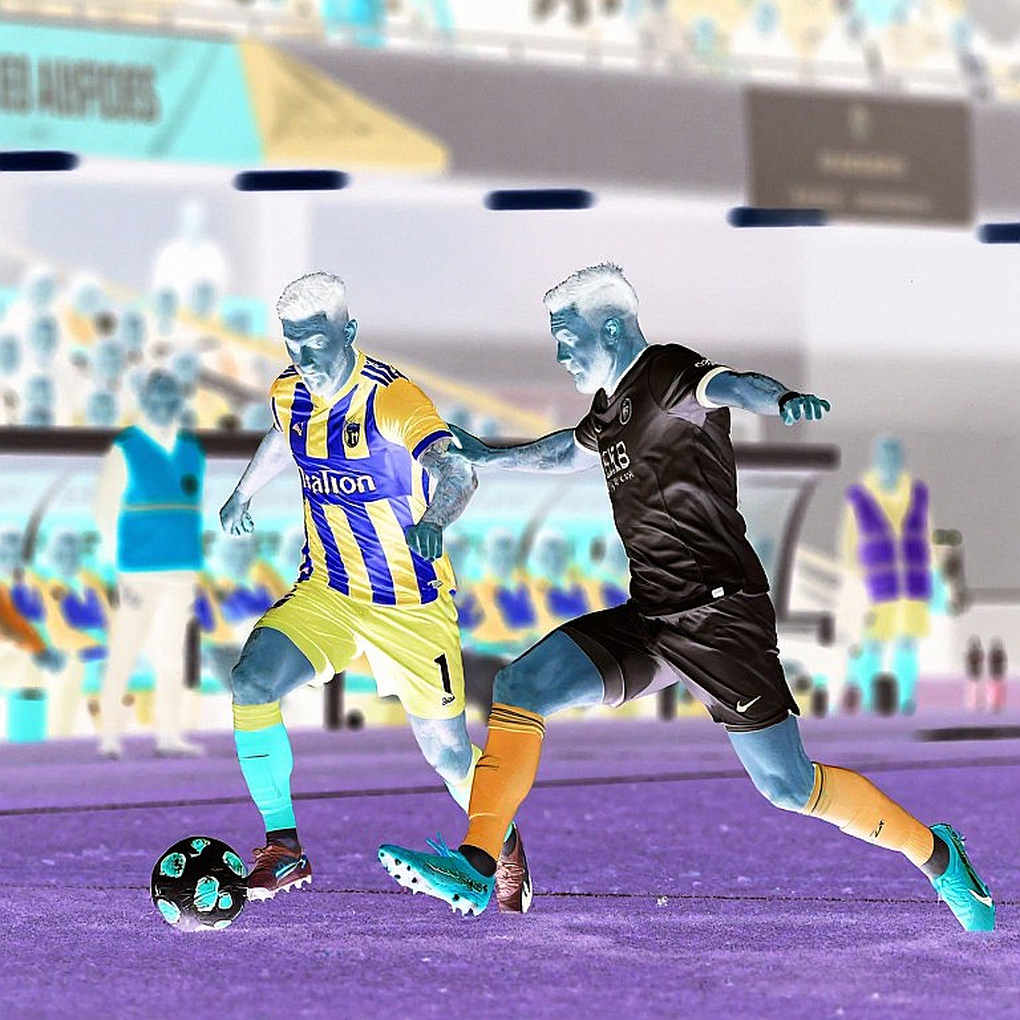
This is the first point that must be separated out, and I will say it plainly: the 3-0 at Anoeta is a result settled in the final six minutes plus stoppage time, not a dominant performance across 90 minutes. For the majority of the match, the contest was unresolved. Real Sociedad had spells controlling the ball in the final third of the opposition half. Atlético accepted ceding territory and waited.
This is precisely the model Diego Simeone has built over more than a decade. It is not new. It is not a tactical invention. But it works, and it works because of players who accept playing in a role for which the media has no accurate vocabulary.
Before going deeper into Giuliano Simeone, he must be placed inside the frame to which he belongs. Atlético in this period is a club in a squad-refresh cycle. New names have been integrated: an attacking midfielder currently leading the team's scoring chart, a centre-back who has scarcely missed a minute, a young full-back promoted to the first team. The squad is in transition. And in a squad in transition, the role of a player like Giuliano becomes more important — because he is the type of player who fills the gap that marquee signings do not fill.
One thing must be stated clearly about the data. This article relies on publicly available match data: two goals, one assist, 452 minutes played, eight ball recoveries, a goal every 150 minutes. These numbers are enough to build an argument about process. But they lack expected goals, expected assists, and pressing-intensity metrics. Any conclusion that goes beyond the available numbers must be flagged as lower confidence. I say this for a simple reason: in this industry, people habitually fill data gaps with emotion, and I refuse to do that.
A Role Without a Name
This is the starting point of any serious analysis of Giuliano Simeone. Even contemporary descriptions of him must concede a paradox: it is almost impossible to determine precisely where Atlético Madrid's number 20 actually plays.
He is not a centre-forward. He is not a pure winger. He is not a full-back. Yet within the same match, one sees him pressing a five-man defensive line, then a few minutes later standing as the highest player in Atlético's block, then a few minutes after that dropping deep into a flank to track a full-back pushing high.
To an entertainment viewer, this is chaos. To an analyst, it is a designed role. I call it the defensive forward — a role that can only exist inside a system willing to trade control of territory for efficiency in transition.
Let us reconstruct the logic of this role mechanically.
First, Atlético defend in a mid-to-low block. That means they do not chase the ball all over the pitch. They let the opponent circulate the ball in low-danger zones, and they wait until the ball enters a zone they have prepared for.
Second, when the ball enters that zone, they need a player capable of turning a recovery into an immediate threat. Not a long-range passer. A player who can carry the ball across the halfway line in three seconds.
Third, because they usually commit only one or two players to the attacking line, the man in that line must participate in both phases: pressure the opposition's first-line ball carrier, then run into space when the ball is recovered.
Giuliano Simeone does exactly these three things. And because he does all three, no fixed positional label can be attached to him. He is the product, not the cause. The structure creates the role; the role creates the numbers.
Here I must repeat a line I still use as a professional principle: magic is only the name we give to what we have not yet measured. When people say Giuliano plays with heart, plays with hunger, plays to prove himself to his father — all of that may be psychologically true, but it conceals a drier truth: he is operating a role designed to maximise the number of touches that occur in the zones with the highest conversion value.
There is another line I keep in mind when analysing this type of player: the axis is skewed not because the machine is faulty, but because people choose not to see it. What is the skewed axis here? It is that every debate about Giuliano revolves around the question "does he deserve to be selected", when the correct question is "what kind of physical and technical profile does this team need in that channel, and who in the squad meets it".
Once the question changes, the entire debate changes axis.
Decoding the 92nd-Minute Goal
The 92nd-minute goal deserves to be dissected as an independent experiment, because it contains almost the entire value of the role.
The move began inside Atlético's own half. The player received the ball more than fifty metres from the opposition goal. In professional football, a move beginning from that distance and ending in a goal has a very low success rate — which is why teams build systems to move the ball into the final third first, rather than encouraging individual breaks from deep.
But Giuliano did not run inside a system that wanted him to do so. He ran in a moment when the system could no longer control things. The ball had been recovered, the match had drifted to the 92nd minute, both teams were tired, and the spaces had become larger than normal. In that context, a player with pace and the ability to carry the ball in open space becomes the perfect conversion tool.
Let us count the defenders left behind: three. This is not a chaotic move by a back line that had lost its organisation in an ungoverned match. This is the Real Sociedad defence standing in their nominal correct positions and being beaten by rhythm. That changes the reading of the move. If the defenders stood in the wrong positions, credit goes to a defensive error. If the defenders stood in the right positions and were still beaten, credit must go to execution.
In the final action, forcing the goalkeeper off his line is a notable tactical detail. In a one-on-one with the goalkeeper, a striker's conversion rate depends largely on whether he forces the goalkeeper into an early decision. By pushing the ball to one side before shooting, Giuliano forced Remiro to leave his line, and once a goalkeeper has charged, the near corner becomes a targetable gap.
Diego Simeone said after the match that a goal arriving in the 92nd minute, after a wonderful burst amid three defenders, was something many people did not truly appreciate. This statement must be taken at its correct value: it is a father speaking about his son. The source has a personal interest. But that does not make his description technically false — it only means it must be verified against footage, and I did that.
One further point belongs in brackets: this goal, as a category, was not a set piece, not a header from a cross, not a finish inside the box after a passing sequence. It was a transition from defensive to attacking state. Within Atlético's playing model, this is the highest-value type of goal, because it is the objective the entire system is designed to produce.
That is why I do not believe in miracles. I believe in data collected properly.
Eight Ball Recoveries and the Value of What Does Not Appear
In modern football, attacking data is recorded very well. Goals, assists, touches in the box, successful dribbles — all counted and widely circulated. But the numbers that determine a player's value inside a system like Atlético's lie on the other side of the statistical sheet.
Giuliano's eight ball recoveries at Anoeta is one such number.
To understand why it matters, the mechanism must be explained. Every time a team wins the ball back in a low or middle zone of the pitch, they have a chance to attack in a state where the opposition defence is not yet organised. But to convert that chance into a threat, at least one player must already be in position when the ball is recovered. If all players have dropped deep to defend, nobody is there to run. If all have pushed high to attack, nobody is there to recover.
Giuliano's role resolves this contradiction by refusing to choose a side. He is a player who participates in the recovery and is simultaneously the first to run into space once the ball is won. Among those eight recoveries, some came from pressing a full-back, some from dropping to track an opposition midfielder, and some from reading a pass and intercepting it.
There is no detailed data on how many of those eight recoveries led to attacks. But one thing can be said with certainty at the mechanistic level: every recovery in a high zone is an attacking opportunity that does not require beating the entire opposition defensive block. A player who generates eight such opportunities in a single match is a player of systemic value, not personal value.
This is what debates about Giuliano usually miss. People argue about whether he deserves to be selected. But that question assumes selection is a talent ranking. Inside a specific system, selection is a problem of matching profile to role requirement. And Giuliano's physical profile matches the requirement of this role to a very high degree.
One more point about the nature of numbers in football. Numbers do not lie, but they do conceal the most important thing. Eight ball recoveries is a beautiful number. But it tells us nothing about the metres he covered at high speed, the number of changes of direction, the number of decisions he had to make in under a second. Those concealed things are precisely the physical price the system is demanding of him.
The Pubill–Giuliano Axis and the Two-for-One Principle
There was a tactical detail in this match that I consider the most important yet the least noticed: the pairing on the flank.
In the second half, Atlético's flank was operated by a young full-back and Giuliano acting as a pair. The full-back held his defensive position vertically, Giuliano dropped to track when needed. The result was that, on the other side, an attacking channel regarded as one of Real Sociedad's strongest was almost entirely neutralised.
I call this the two-for-one principle. The idea is mechanically simple: an ordinary winger only attacks. A two-way winger can both attack and defend. If he defends effectively alongside the full-back, that side becomes very hard to break through. And when that side is safe, the team can commit extra numbers to the opposite side to attack.
This is why Atlético can play with fewer nominal attackers and still generate threat. Giuliano does not only create value through his direct contributions. He creates value by freeing up resources for the rest of the squad. This is the negative space of tactics — the thing statistical sheets cannot measure.
One admission: the confidence level of this conclusion is medium, not high. A single match is a small sample. To claim the Pubill–Giuliano axis is a stable tactical solution would require observing at least ten matches with a similar configuration. But even at the level of one match, the mechanistic description retains value: it shows that Giuliano's role is not an emotional choice by the coach, but a solution to a specific problem.
And this is the important part: when a tactical solution exists and works, the debate about whether that player is selected for family reasons loses its technical legitimacy. It becomes a debate about power instead.
Oblak's Long Balls
Another detail I noted while reviewing the footage was Atlético's goalkeeper playing long balls aimed at Giuliano.
In modern football, going long is often read as a sign of crudeness — a team unable to play out from the back must use long balls to bypass the press. That reading is correct in many cases, but not in this one.
A long ball aimed at a specific player in a wide channel is a designed pattern. It works on the following logic: when the opposition press high, they push their defensive line up near the halfway line. That leaves space behind them. If the team has a player fast and strong enough to contest a long ball in that zone, they can bypass the entire pressing block with a single pass.
Atlético's use of this pattern against Real Sociedad shows one thing: Giuliano is part of a specific match plan, not a player introduced for non-footballing reasons. That plan included a contingency for the possibility of Real Sociedad pressing high.
Confidence here is lower, since I have no data on the number of long balls in this match. But even at the level of direct observation, the pattern is meaningful: it is another detail showing the role is designed, not allowed to arise by chance.
Four Hundred and Fifty-Two Minutes and the Physical Load
This is the number I consider most important from a squad-management perspective: Giuliano is the player with the second-highest minutes total in Atlético's squad, behind only a centre-back who is almost never rested.
Four hundred and fifty-two minutes, in the context of the fifth matchday, means he has played almost every available minute. This number says two things at once, and both are important.
First: the coach has absolute trust in him. This is not the behaviour of a man putting his son into the line-up to indulge him. It is the behaviour of a man dependent on a player to the point that he cannot take him off.
Second: the physical load is being piled onto a young player at a very high level. A two-way role, demanding high-speed running both in attack and defence, with the second-highest minutes in the squad, is a formula with accumulating injury risk. This risk does not appear in a single match. It appears in the thirtieth.
I register this as a warning, not a conclusion. Because data on running volume and sprint counts is not published, I can only say that the structure of the role itself generates physical risk, and that a high minutes total is a factor increasing that risk.
In the GPS data report I once wrote in Marseille years ago, I learned a lesson I still apply today: when a player's performance declines, the first question is not "is he out of form", but "what in the system changed that forced him to work differently". In Giuliano's case, that question does not yet need asking, because he is playing well. But it will need asking if Atlético enter a congested schedule and he begins to lose pace.
One Goal Every 150 Minutes and the Limits of a Small Sample
A goal every 150 minutes is a very good number. It must be said at once: it is good to the point of being suspicious as a sample.
Across roughly 452 minutes, Giuliano scored two goals and provided one assist. In raw output terms, this is the most impressive start of his Atlético career. But 452 minutes is roughly five matches. In football, five matches is a small sample. And over five matches, a player's scoring rate is heavily influenced by variance — one bounce falling to the right foot in the right position can push the rate up, and one near miss can drag it down.
This does not diminish the performance. It simply places it in its proper context. A career-best start is a real fact. But it is not a forecast. If one uses one goal every 150 minutes to predict a full season's tally, one is extrapolating from a small variable. And extrapolating from small variables is one of the most common errors in football analysis.
This is where I must repeat something I tell colleagues: do not stretch two or three matches into a rule. Do not turn a short-term trend into a long-term essence. This good start is a good start. To say it becomes a pattern requires more time.
But there is another aspect of this number worth noting. His two goals came from two different types of move — one from transition, and at least one from a constructed attacking sequence. Variety in the origin of goals is a more positive sign than the rate itself. If both goals had come from the same type of situation, one might suspect he was lucky at a specific weakness of the opponent. Variety suggests adaptability.
The Simeone Template and the Question of Originality
One thing must be said plainly about tactical originality: Giuliano's role is not an invention. It is the modern version of a template Atlético have used for a long time.
For years, Atlético under Diego Simeone built their reputation on players willing to do more work than the statistical sheet records. Strikers dropping to contest duels, wingers tracking opposition full-backs, centre-backs joining attacks. The template is not new. It has only been updated.
The interesting thing is that the current version of this template is being applied in a football landscape that has changed. In recent years, gegenpressing — imposing high pressure immediately after losing the ball — has become standard in many leagues. But in my observation, gegenpressing has been substantially decoded. Mid-tier teams have learned to use physicality to turn football into athletics, and that reduces the effectiveness of pure high-pressing systems.
In that context, Atlético's model — ceding territory, defending in a block, converting quickly — becomes more fitting than public opinion judges it to be. A team willing not to control the ball can still win if it has players capable of efficient transition. Giuliano is such a player.
The phenomenon of mid-tier teams using physicality to turn football into athletics is one I have observed for years, and it is why big clubs need players capable of beating dense defensive blocks with technique, not only with collective speed. But inside Atlético's system, the speed of an individual in the right position is itself the tool for countering those blocks.
The Counter-Intuitive Angle: The Scoreline Is Deceiving You
This is the section I feel most compelled to state clearly, because it runs against the current of public opinion.
The 3-0 scoreline is telling a more comfortable story than the true one. All three goals arrived between the 84th minute and the 90th plus five. That means that for the opening 84 minutes, the match was unresolved. Real Sociedad held the ball, Atlético waited, and neither side created a clear difference.
If a goal arrives in the 84th minute, the first question I ask concerns the fitness of the team that conceded. In most matches, a late concession is not the result of a tactical error, but of a defensive system whose intensity has declined through fatigue. A defensive block is a structure dependent on the synchronised movement of all its members. When fitness drops, the distances between the lines increase, and gaps appear.
This does not reduce the value of Atlético's win. But it changes how that win is read. This was not a match in which Atlético dominated on every front. It was a match in which Atlético waited patiently, and when the gaps opened in the closing phase, they converted.

The question for the matches ahead is: what happens if the gaps do not open? What happens if the opponent holds their organisation to the final whistle? In those situations, Atlético need a different attacking option — and that is the potential weakness a 3-0 win at Anoeta conceals.
This is also the moment to address another issue: do not let the scoreline generate a story about the return of an empire. It is a good result. It is a necessary result after a slump. But it does not prove the crisis is over.
The Father–Son Story and the Question of Legitimacy
Now I must address the dimension I have deliberately avoided until this section: the family relationship.
For several weeks, Diego Simeone's selection of his son had become a weapon in public debates. The familiar framing sits somewhere between nepotism and favouritism. And the nature of this debate matters more than the debate itself.
In most cases, when a player is criticised, the criticism targets his professional ability. But when that player is the coach's son, the criticism targets the coach's legitimacy. These are two entirely different types of criticism. One can be answered by a performance. The other can only be answered by time.
This is why I argue the most important thing in the Anoeta match was not the goal, but the celebration after it. Contemporary reports described the image of a child who had finally shed a heavy burden. That is an emotional description, but it contains a fact: the pressure had accumulated to the point that a celebration became an expression of relief.
This is where I must allow myself a human moment, because I have a principle against reducing everything to structure. A young player criticised not only for how he plays but for being the coach's son carries a type of pressure no statistical sheet can measure. And when he scored in the 92nd minute of a difficult match, his reaction was not that of a player completing a task. It was the reaction of a man who had just proved something to himself.
One more thing: Diego Simeone used the post-match press conference to shift attention from the question "should he be selected" to the question "what did he do". That was a deliberate communications manoeuvre, and it worked. But it does not solve the root problem: any future slump will reactivate this story, regardless of how many goals Giuliano scores.
The Blind Spot Atlético Do Not Want to Name
I want to return to an idea raised early in this piece. Football does not die when stadiums are empty. It only reveals its true skeleton.
The same holds for debates about players. When the noise of public opinion quietens, the true skeleton of a role is revealed. And the true skeleton here is this: Atlético are operating a system that depends on a role nobody wants to name, because naming it means admitting it matters more than an attacking statistical sheet can display.
The blind spot is the set of unmeasured contributions: the runs that do not receive the ball, the drops to cover when the full-back has pushed high, the presses that force an opposition defender to pass backwards instead of forwards, the stretches that open space for teammates. No statistical sheet records these. But without them, the system does not function.
Footballing magic — the moments that make crowds rise — is usually the name we give to what we have not yet measured. Giuliano's 92nd-minute goal was not magic. It was the output of a designed role, inside a system built to convert transitions, by a player whose physical profile suits operating that role. What makes it look like magic is that it happened in the 92nd minute, after fifty metres, past three defenders, and under the eyes of a father standing on the bench.
But when those emotional elements are stripped away, what remains still holds: eight ball recoveries, the neutralisation of the opponent's strongest attacking channel, a goal from a transition, and an unclassifiable role in a squad in transition.
What to Verify in the Matches Ahead
So what is the question moving forward?
These are the points I will be tracking, and I invite the reader to track them with me.
First, whether the minutes load is sustained. If Giuliano is still the second-highest minutes player at match twenty, that is a signal of structural role. If he begins to be rotated, that is a signal that the coaching staff have identified the physical risk.
Second, whether the Pubill–Giuliano axis is maintained. If this flank pairing continues to neutralise opponents' strongest attacking channels, we can begin to speak of a tactical solution, not merely a flash of brilliance.
Third, what happens when Atlético must attack against an organised defensive block. This is the real test for a transition-defending team. The 92nd-minute goal at Anoeta came when the match had lost its structure. The harder question is whether Atlético can generate goals when the opponent remains fully organised.
Fourth, whether the goal every 150 minutes settles at a reasonable level. I do not expect it to be sustained at that rate. If Giuliano ends the season at one goal every 250 or 300 minutes, that is still a good season for a young player. What matters is not the absolute number, but whether he remains part of the moves that lead to goals.
Fifth, and perhaps most important, what happens if Atlético slump again. The father–son story does not disappear. It only sleeps. And in a club where the coach's legitimacy is anchored to results, every difficult period reopens the door to it.
Football is a sport played with the feet, analysed with the eyes, and judged — unfairly — by short-term memory. A 92nd-minute goal at Anoeta is a beautiful memory. But if we want to understand what is really happening with Giuliano Simeone and with Atlético Madrid, we must forget that memory and go back to the footage from the start. That is dry work. But it is the only way to find the truth behind a goal that everyone is praising as a miracle.
Eight ball recoveries. One assist. Two goals in four hundred and fifty-two minutes. Numbers do not lie, but they do conceal the most important thing: that behind one of the finest goals of this season stands a player operating a role that public opinion has refused to acknowledge even exists.